An Asset Does Not Have to Stop Operating to Start Costing Production.
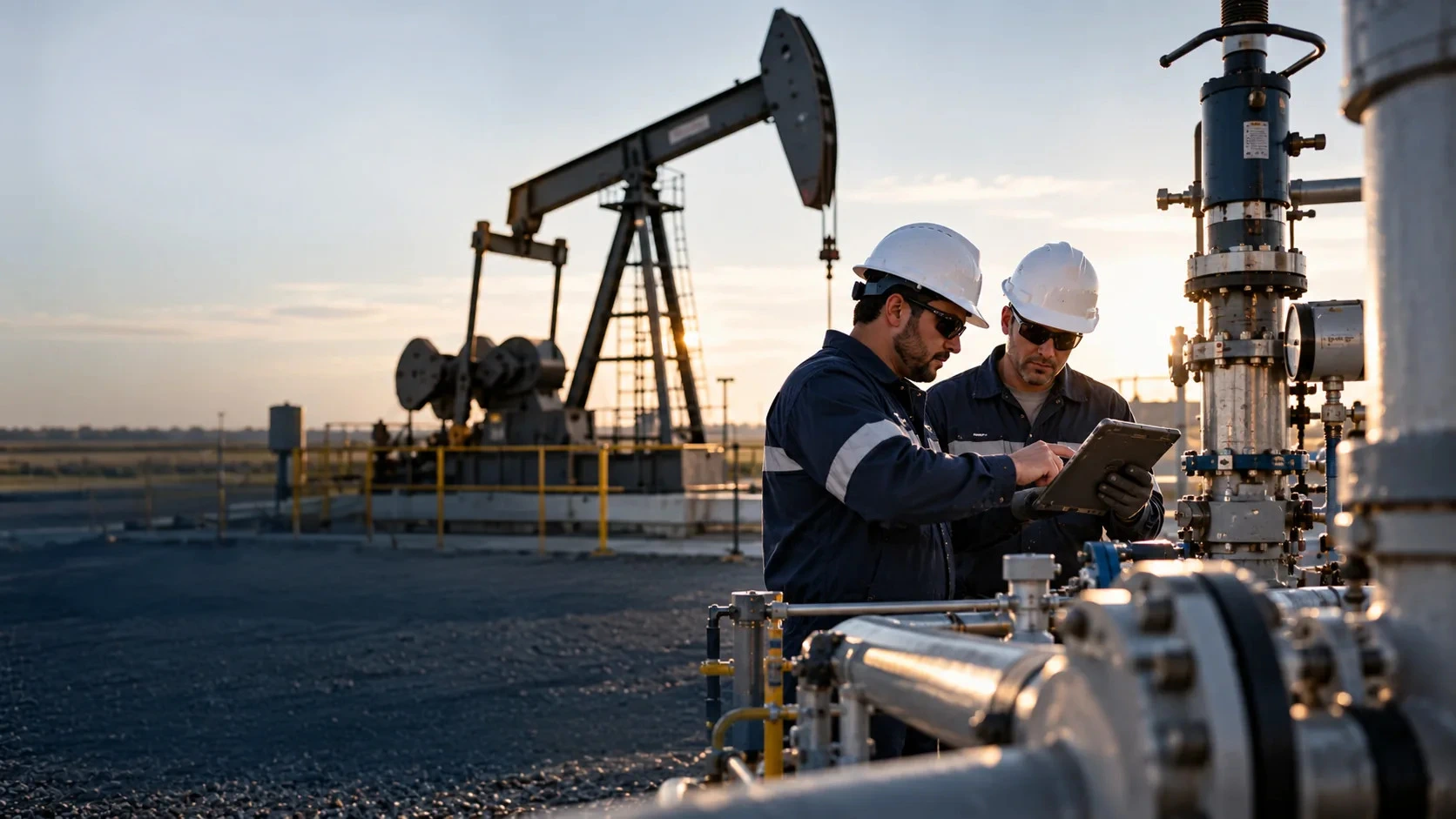
In oil production, equipment failure is not always a sudden event. Production losses can begin long before an asset completely stops.
-
A pumping system begins losing efficiency.
-
A motor operates outside its normal condition.
-
A valve no longer performs as expected.
-
Instrumentation begins providing unreliable information.
-
A rotating asset develops abnormal vibration or temperature.
-
A production system continues operating — but below its expected capability.
The equipment may still be running. But production may already be paying the price.
Maintenance becomes a production protection strategy.
From Equipment Reliability to Production Reliability
The objective of maintenance should not simply be to keep equipment running. The real question is whether the asset can continue performing the function and capacity required by the operation.
In an oil production environment, a producing asset may technically remain operational while deterioration progressively affects efficiency, availability, throughput or production capacity.
Asset HealthReliabilityAvailabilityProductionOperational Continuity
Hidden Production Losses Matter
Not every production problem announces itself with a shutdown. Some losses develop progressively. Equipment degradation can contribute to reduced pumping performance, process restrictions, unstable operating conditions, repeated interventions or declining production efficiency.
Zero downtime does not necessarily mean zero production loss.
A system can continue operating while producing below its expected potential. For maintenance and operations teams, identifying that difference can be extremely valuable.
Maintenance Strategy Must Follow Production Criticality
Not every asset deserves the same maintenance strategy. The consequence of losing a non-critical auxiliary component is very different from losing a critical pump, motor, compressor, production control system or artificial-lift component.
Asset CriticalityFailure ModeDetectabilityProduction ConsequenceMaintenance Strategy
Instead of asking only when equipment should be maintained, operations and maintenance should also ask: How much production is exposed if this asset deteriorates or fails? That question connects maintenance directly to business performance.
Predict Before Production Is Lost
Where deterioration can be detected, condition monitoring and predictive maintenance can provide an opportunity to intervene before degradation becomes a larger production event.
Depending on the equipment and failure mode, this may involve vibration, temperature, pressure, flow, electrical condition, lubrication condition and operating-performance monitoring.
The value comes from converting equipment condition into maintenance decisions.
Prevent What Can Be Prevented
Preventive maintenance remains essential when scheduled intervention can reduce the probability of functional failure. Inspection, lubrication, adjustment, calibration, cleaning, testing and component replacement can all contribute to reliability when technically justified.
But excessive preventive maintenance can also consume resources and introduce unnecessary intervention.
The right maintenance on the right asset at the right time.
Correct Before a Defect Becomes a Production Event
Corrective maintenance does not always mean waiting for catastrophic failure. When inspections or condition monitoring identify a developing defect, planned corrective action can prevent a manageable equipment problem from becoming an emergency production problem.
A planned intervention can often be coordinated around operational requirements. An unexpected failure dictates its own schedule.
Maintenance Can Also Support Production Recovery
In mature production environments, when an asset or production system is operating below expected performance, the opportunity may not always require new infrastructure. Sometimes the first question should be whether existing assets are delivering the production capability they were designed to provide.
Maintenance, inspection and reliability analysis can help identify equipment degradation, recurring failures, restrictions or operating deficiencies that may be limiting productive capacity. Where technically feasible, correcting those conditions can contribute to restoring equipment performance and supporting production recovery.
Protect existing production. Help recover production capacity that equipment degradation may be suppressing.
Production Reliability Requires Maintenance and Operations to Work Together
Maintenance cannot optimize production reliability in isolation. Operations understands how the asset behaves under real production conditions. Maintenance understands its physical condition and intervention history. Reliability connects failure behavior with operational consequences. Engineering provides the technical framework for modification and improvement.
Operations + Maintenance + Reliability + EngineeringProduction Performance
TLBS: Maintenance With a Production Purpose
At TLBS Corporation — Engineering, Projects & Maintenance, we approach industrial maintenance from the perspective of the operation the equipment must support.
Our focus is not simply repairing equipment. It is understanding how asset condition, maintenance strategy and reliability can affect availability, operational continuity, production capability and production recovery.
Through preventive and corrective maintenance, inspections, reliability support, shutdown activities and technical services, TLBS works to help industrial operators protect the assets that support their operations.
The Strategic Question
How much production capacity could be hidden behind equipment degradation, recurring failures or an ineffective maintenance strategy?
The answer may reveal opportunities that are not visible when maintenance and production are managed separately.
CONTACT US
If equipment reliability, recurring failures, reduced availability or production performance are becoming operational concerns, TLBS Corporation can evaluate the maintenance and reliability requirements behind the problem.
Engineering. Projects. Maintenance.